Every job below is one we do ourselves across New York.
We excavate and compact the subgrade, lay a stone base, then pave in a binder course and a surface course so the driveway can handle a car in freezing weather and heat. Most residential driveways run two to three inches of asphalt over a compacted base, more if the soil underneath is soft clay.
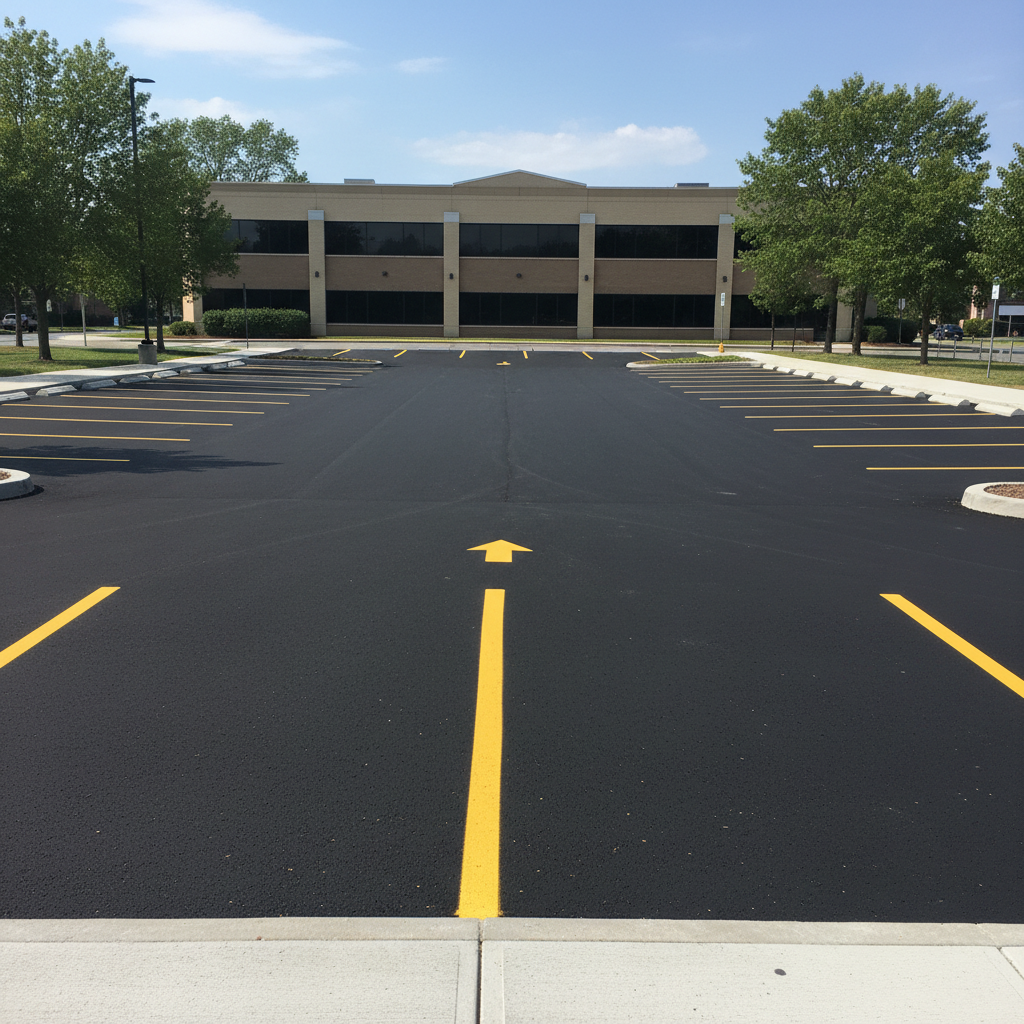
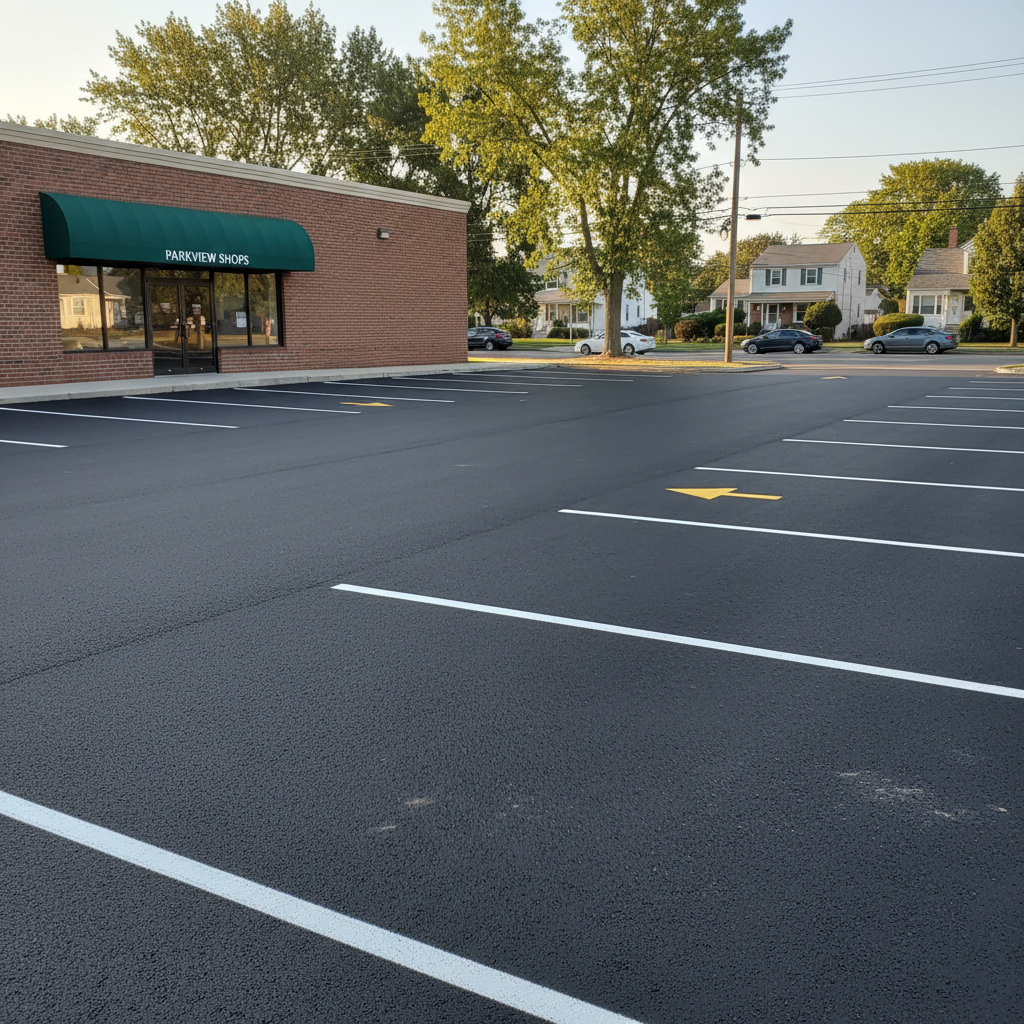
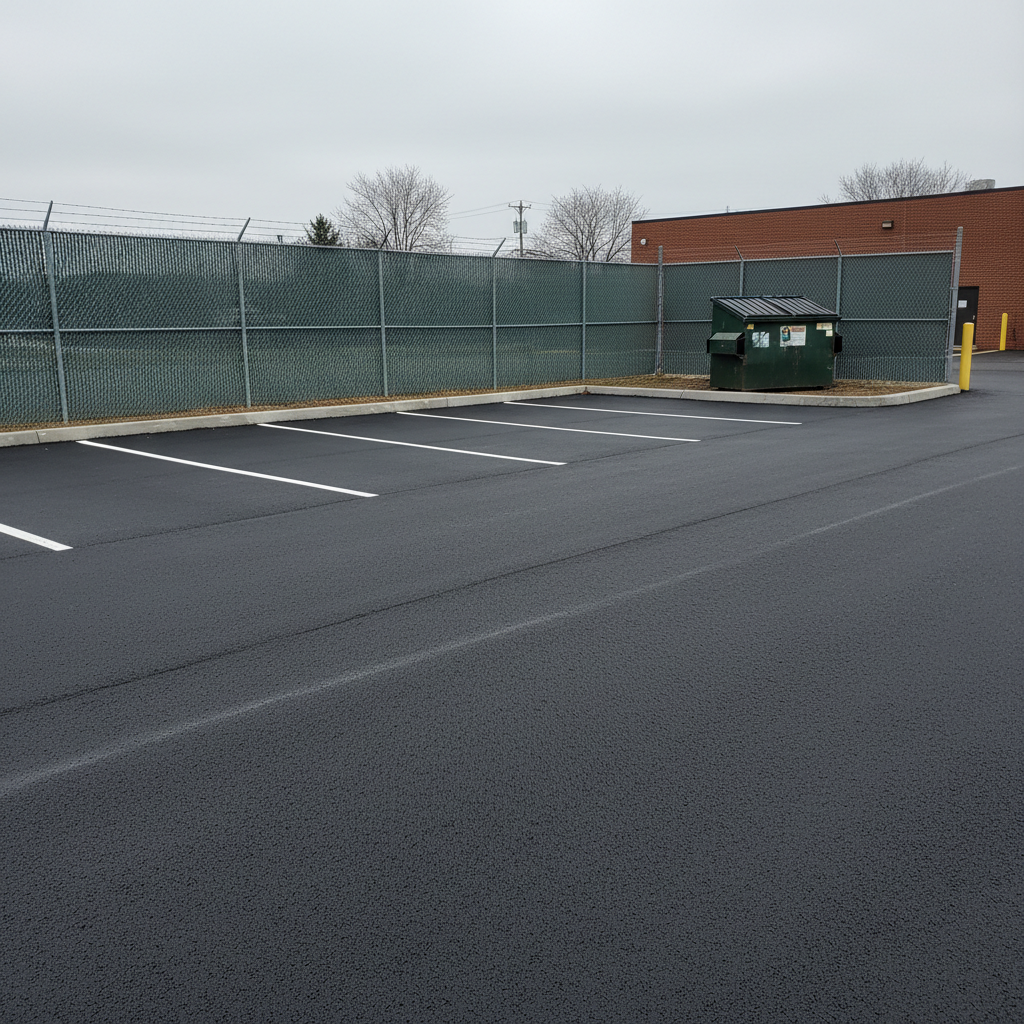
Commercial lots take more base and more asphalt than a driveway because trucks and daily traffic load them harder. We grade for drainage toward the catch basins first, because a lot that ponds water fails early no matter how thick the asphalt is.
Sealcoat is a maintenance coat, not a repair, it keeps water, oil and UV out of the asphalt between repavings. We recommend it every two to three years on a driveway, and we won't sealcoat over cracks that should be filled first.
Cracks under a half inch get a hot pour rubberized sealant that flexes with the asphalt through freeze-thaw. Wider cracks or alligator patterns mean the base has moved, and sealant alone won't fix that, we'll tell you if that's the case before quoting it as a simple crack job.
A pothole is usually water that got under the surface and then froze and expanded. We cut the damaged asphalt back to solid material, square the edges, and compact new base before patching, instead of dumping cold patch in the hole and calling it done.
If the base underneath is still solid, we can mill off the top layer or pave a new surface course right over the old one. It costs less than a full tear-out and works well on driveways and lots where the cracking is surface-level, not structural.
Milling grinds off the top layer of old asphalt before a repave, so the new surface ties in flush at the edges and doesn't build up height at the garage door or a storefront entrance.
Faded lines make a lot look worn even when the asphalt underneath is fine. We lay out parking stalls, fire lanes and ADA markings to spec after a repave or as a standalone job.
For smaller areas of failed asphalt, a sunken spot or a utility cut, we cut it out and patch it to match the grade around it so water doesn't collect in a dip.
We pour asphalt curbing and driveway aprons, including the city-regulated apron section where a driveway meets the street. That strip has its own permit requirements in New York, and we handle the application as part of the job.
Four steps, and no surprises in any of them.
You tell us what you want doing, we look at what is actually there, and we ask the awkward questions early.
In writing, itemised, free. If something might add cost later we flag it now rather than at the end.
Same crew throughout. We cover your floors, keep the dust down and tidy up before we leave each day.
You point out anything you are not happy with and we fix it before the invoice, not after.
These are the towns where we actually show up to pave and patch.
What usually comes up once a paving job is underway.
Describe the problem and we will tell you what it probably is. No obligation.